How the Inductive Bible Study Changed My Life
My story of discovering inductive Bible study, gaining confidence in Scripture, and encountering the Holy Spirit through observation, interpretation, and application.

There was a time when I loved to study the Bible, but I did not really know how to study it well.
I loved the Word of God. I read it. I wanted to understand it. I wanted to know what God was saying through His Word. But I had no formal training in Bible study. Then, reading a book changed my Bible study from the disorderly reading of Scripture to the disciplined and systematic analysis of Scripture—and to encounters with the Holy Spirit.
Bible study is a place of encounter with the Holy Spirit.
And yes, Bible study is a place of encounter with the Holy Spirit, not some empty academic endeavor to fill your head or simply study passages.
However, many Christians do not even know where to start. Some have given up and simply decided that Bible study is not for them and that they must wait for someone else to tell them what the Bible is saying. They somehow think that some Christians have special favor with God to receive revelation or understand what the Scriptures mean.
Well, I am here to challenge you and change that. In fact, after reading this, you might be surprised by how simple it is and how impactful it has been. Below is my story of how inductive Bible study changed me.
The Story: Discovering Inductive Bible Study
Around the year 2000, I came across a book that changed my life. It was Methodical Bible Study by Robert A. Traina. I was simply looking through the theological resources of my uncle, Reverend Orock Martin, out of curiosity.

Faith Meets Real Life
God’s Word meets us in ordinary conversations, homes, questions, and relationships—not only at a desk.
The title of the book caught my attention, and I began reading it. I was intrigued by the approach and began practicing it. When I read that book, something happened to me that I can only describe as life-changing. It gave structure to my Bible study and helped me learn how to handle the Word of God carefully.
And as you always hear me say, it opened my mind to receiving revelations from Scripture and, most importantly, to encountering the Holy Spirit in the Scriptures.
And now, more than 25 years later, I have grown in my personal use of inductive Bible study, from simple Bible study practices like having my daily devotions to serious, in-depth Bible studies.
There are many things I love about this approach, but here are a few:
- It is so simple that every Christian, with zero theological training, can start using it right away. In fact, I made a video of about 45 minutes titled Inductive Bible Study for the Absolute Beginner, taking just 45 minutes to teach the basics so everyone can learn.
- It is sophisticated enough for serious Bible students and theologians to use. Its principles are the same ones theologians and seminary students use to interpret the Bible. So, you are not learning some simple Christian method, but sound theological methods of approaching the Bible.
Another Student's Testimony
Here is one of the most memorable reports I received from one of our students who attended the live sessions we held before.
She had attended the sessions for about two or three years in a row. Then, after watching Inductive Bible Study for the Absolute Beginner, something clicked.
Keep Walking in the Light
Confidence grows as Scripture moves with us into the rhythms of everyday life.

She told me once during our class that, for the first time, she became confident in her interpretation of Scripture.
Brethren, this is huge.
Studying the Bible is one thing.
But coming to a place of personal confidence is a whole different level.
How I pray and wish that Christians would come to that place.
I often find Christians arguing about doctrines.
Often, they quarrel about what this man of God said against what that man of God said. But personally, they do not have their own conviction about what Scripture is saying.
Let me repeat what I said before.
The Church—God's people—will never be built up if individual Christians are not established in the Word.
There is a place for Bible teachers like me and for pastors.
But if you want to build up God's Church, teach Christians to independently understand God's Word, believe it, and put it to work without depending on pastors, ministers, prophets, or teachers.
I know that is a hard pill for us ministers to swallow, but God's intention is not to build ministries. It is to build His people through ministries (Ephesians 4:12).
Finally, Order in the Disorder
When I read Traina's book, my Bible study moved, for the first time, from a spaghetti system—with chaos everywhere, passages read as they came to mind, no plan, and a simple dependence on some strange revelation to drop into my spirit from heaven—to an orderly process of systematically examining God's Word while powerfully encountering the Holy Spirit.
As a young Pentecostal, I thought orderly study of the Word was too cerebral. I thought those who did that were not walking in the Spirit.
Thank God He pulled me out of such charismatic or Pentecostal errors.
Brethren, learning to study the Bible systematically and in an orderly way is one of the best things you can ever do to give the Holy Spirit the best opportunity to fill your heart with revelations.
I am not telling you that from some book I read.
I am telling you that from more than 25 years of examining the Scriptures and walking with God.
Three Simple Steps Changed How I Studied
Inductive Bible study simply takes key exegetical steps and arranges them in an orderly manner. The three key steps are observation, interpretation, and application.
1. Observation
What does the text actually say? Before you ever ask, “What does this mean?” always train your mind first to find out what the text actually says: the words, the grammar, the structure, and so on.
Let me shock you: no “revelation of the Spirit” contradicts the grammar in the passage. The Spirit revealed the Word using the exact words, sentences, structure, grammar, and so on.
The next time you hear teaching that contradicts what the text, grammar, or literal meaning says, and it is called a special revelation from the Spirit—or someone says, “God told me this or that”—run!
2. Interpretation
Very simple: What did the author have in mind when writing those words or saying those things? Interpretation is that simple.
Notice, I did not say what it means to you.
I said what the author had in mind.
The Bible was not made up of spiritual murmurings dropped into people's minds while they were in a stupor, with words coming out as though the Spirit were dictating to them.
No.
These were real people dealing with real issues and speaking to real people.
They knew what they were saying.
Yes, some might not have understood the full depth of everything, but they knew what they were saying.
For example, Jesus said, “Come unto me, all ye that labour and are heavy laden, and I will give you rest” (Matthew 11:28, KJV).
Interpretation asks: What did Jesus have in mind when He said this?
You then use the facts you have gathered from observation to understand what Jesus meant.
3. Application
I should pause here and say something.
Everyone, including non-Christians or even theologians who are not believers, can observe Scripture, quarrel about it, or debate its interpretation and meaning.
But application is different.
It means bringing God's Word from paper—from an ancient book—and applying it to real-world situations today. It is not just some theoretical application, but the demonstrable power to change hearts, lives, and circumstances.
Everyone can preach and teach what Jesus meant when He said, “Come unto me, all ye that labour and are heavy laden, and I will give you rest” (Matthew 11:28, KJV).
But actually helping people find that rest today is a different story entirely.
Why is that so?
It takes the power of the Holy Spirit to bring the Word of God into the present—to today.
In fact, I realized that people often quarrel about interpretation, but the harder part is application.
We can quarrel about or debate the meaning of Scripture.
But understanding how to apply God's Word to set people free from sin, pornography, anxiety, depression, disease, demonic strongholds, fear, and more today is the power of application.
Remember when Satan tempted Jesus and asked Him to bow before him. Jesus had to know how what God had said applied to His present situation (Matthew 4:8–10).
Brethren, that is what Christians need most.
But correct application must be founded on correct observation and interpretation.
Do you remember Jesus saying, “Wherefore by their fruits ye shall know them” (Matthew 7:20, KJV)?
If I am a good teacher of the Word, the proof of my ministry is not wonderful revelations that get you excited.
It is that, as you read the Word, your ability to study God's Word changes. It is that, as you read my messages, revelation and peace fill your heart, anxiety goes away, depression leaves, holiness starts burning in your life, and each day you look more like Jesus.
Then the power of God begins to fill your life, and you begin to speak to demons and diseases.
Brethren, this is what Bible study is meant to be.
That is why I encourage you never to get into doctrinal arguments with others.
It never helps anyone.
Arguing over what Scripture means is cheap.
Bringing God's Word to His people to free them from sin, solve their problems, and change their lives is where the real thing is.
Interpretation is not and should never be the goal of Bible study.Application is.

What Is Your Story?
I have encountered God in prayer, and I know the power of prayer, so I do not mess with it.
But I have also encountered God in the Word.
Please do not choose between prayer and Bible study.
They are not options God has given you so you can select the one you are most comfortable with.
They are both for you.
Many of you might tell me about teachings or books that have changed your life.
Or pastors who have impacted you.
Here is my question: What is your revelation of God and your encounter with Him in the Word?
How have the Scriptures impacted not merely your understanding of Scripture, but your very life?
The main next step
Watch Me Tell This Story
In this video, I share how inductive Bible study changed my life and why learning to handle Scripture carefully can change yours too.
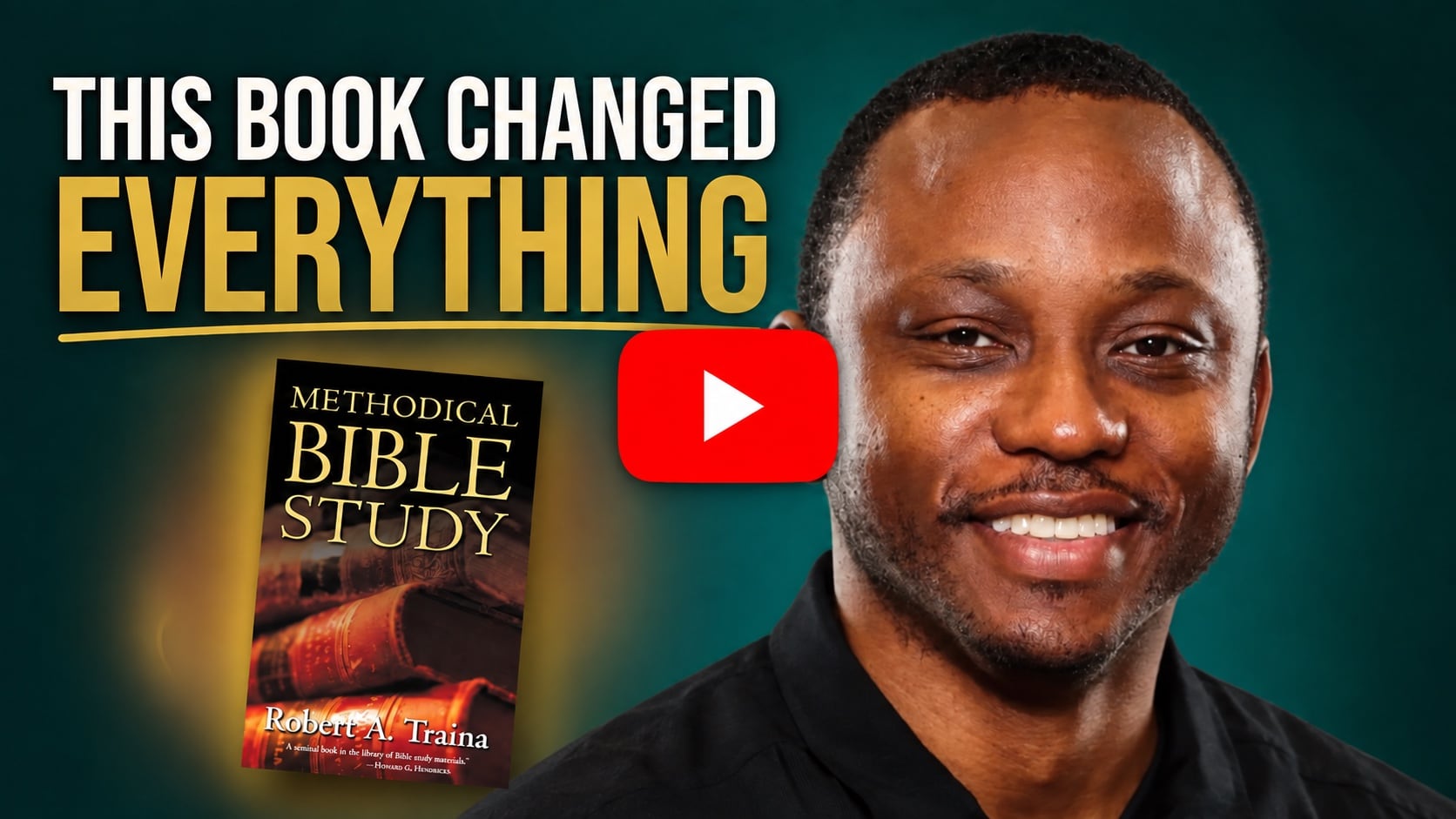
My story of how inductive Bible study changed my life · Opens YouTube in a new tab.
Watch More
Inductive Bible Study for the Absolute Beginner
Ready to learn the method step by step? This beginner-friendly class gives you a practical place to start.
Study Scripture Step by Step with Deshen
The Deshen App gives you a guided place to read Scripture and work through observation, interpretation, and application for yourself.

Keep Reading
Catch up on the last three Deshen Weekly newsletters.
What Is the Kingdom of God, Really? Part 2
Keep this conversation going.
Browse the Weekly archive ↗
Spiritual Growth

Spiritual Growth
Spiritual Growth

Join the conversation
Comments
No comments have been published yet.
Leave a comment
Share a thoughtful response. Comments are reviewed before they appear publicly.