How to Get Our Prayers Answered in Times of Trouble: Hebrews 4:16 Explained
Today, I want to share one of the most powerful scriptures in the Bible for getting answers to our prayers in times of trouble.

Today, I want to share one of the most powerful scriptures in the Bible for getting answers to our prayers in times of trouble. If you have a challenge that is causing anxiety or fear, pay close attention.
This is not just some fancy teaching. It is to put something in our hands that we can put to work and command changes.
I pray that we open our hearts and receive this word from the Lord. It is not something I have just studied. Hebrews 4:16 has become my anchor when trouble hits.
But first, we must deal with one major problem: our expectation.
The Low Expectation Syndrome
Brethren, let me be honest and even vulnerable with you. Few things shake our faith like praying, seeking God, and doing what we were told to do, only for nothing to happen. No help comes.
Disappointment almost ruined my faith in God. I will share the details another day. But I was in such need. Despite praying, seeking help from other men of God, and being spiritually busy, nothing happened.
When we have prayed, believed, and asked, yet no help comes, it takes grace to pray again. It takes grace even to believe again.
Many of us might not expect much from prayer anymore. Why? Not because prayer does not work, but because it has not worked for us. Not once, twice, or three times, but many times. We asked, waited, and nothing happened.
It is not that we do not want to pray. Past failures have damaged our faith. Sometimes we even comfort ourselves with valid Christian or theological reasons why God will not give us what we ask for.
We are taught to pray first, before trying other ways. Prayer should not be our last resort. That is true. But why do many still put prayer last? Because they have prayed first many times before, and nothing happened.
Even “I will keep you in my prayers” can become a religious way of saying, “Well, there is nothing else we can do.” No expectation. Zero expectation of change.
Brethren, this has challenged my own faith. By God's grace, I am still overcoming it. I pray that every one of us will be rescued from this deep trap the enemy wants to keep us in.
Hebrews 4:16 in Context

“Let us therefore come boldly unto the throne of grace, that we may obtain mercy, and find grace to help in time of need.”
—Hebrews 4:16, KJV
Notice how practical this verse is. It tells us to come, shows us how to come, names whom we approach, and tells us what we can receive.
As I often say, the Bible uses figurative language. Identify it, then look at the author's background and context. Biblical authors often drew from their cultures.
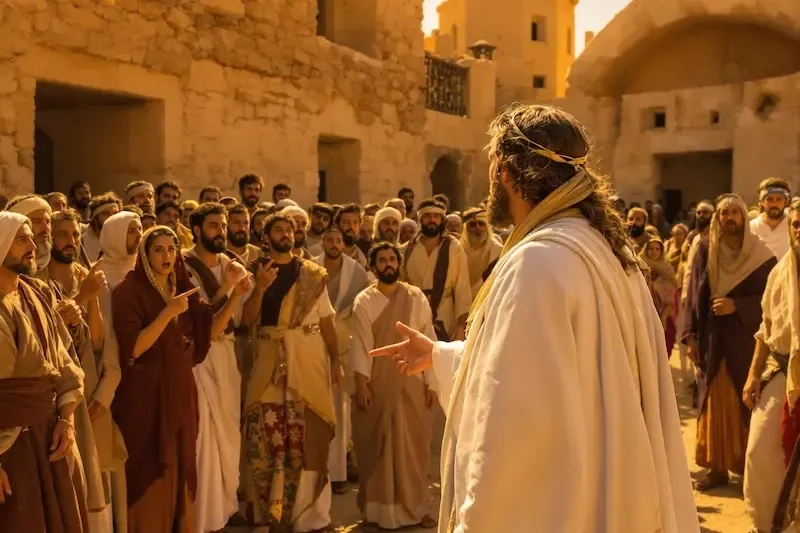
Here we see a High Priest standing in heaven, inviting us in. We also see a king seated on his throne. People come before him with problems, asking for help. Many of us know Esther's story (Esther 4:11; 5:1–3).
But the wise woman of Tekoa makes this picture especially clear. Joab arranged her visit, but the events show what was common in those days:
1 Now Joab the son of Zeruiah perceived that the king's heart was toward Absalom. 2 And Joab sent to Tekoah, and fetched thence a wise woman, and said unto her, I pray thee, feign thyself to be a mourner, and put on now mourning apparel, and anoint not thyself with oil, but be as a woman that had a long time mourned for the dead: 3 And come to the king, and speak on this manner unto him. So Joab put the words in her mouth. 4 And when the woman of Tekoah spake to the king, she fell on her face to the ground, and did obeisance, and said, Help, O king. 5 And the king said unto her, What aileth thee? And she answered, I am indeed a widow woman, and mine husband is dead. 6 And thy handmaid had two sons, and they two strove together in the field, and there was none to part them, but the one smote the other, and slew him. 7 And, behold, the whole family is risen against thine handmaid, and they said, Deliver him that smote his brother, that we may kill him, for the life of his brother whom he slew; and we will destroy the heir also: and so they shall quench my coal which is left, and shall not leave to my husband neither name nor remainder upon the earth. 8 And the king said unto the woman, Go to thine house, and I will give charge concerning thee.
—2 Samuel 14:1–8, KJV
Let us use this story to explain Hebrews 4:16.
1. Come before the King—and come boldly
The woman came before a physical king on a physical throne. In Hebrews 4:16, our approach is spiritual. Coming before God means bringing Him a request. We have a problem we need gone, and we bring it before Him.
Some say we have already come to God or are already in His presence, so a Christian cannot “come” to Him. That forces the same meaning of “come” into every verse. Here, it means bringing a request.
How do we come?
Through Jesus. Our High Priest has passed into the heavens and opened the way to God. Because of Him, we already have access (Hebrews 4:14–16; 10:19–22).
In prayer. When we pray about a need, we bring that request before God. Being His children gives us access; prayer is one way we use it.
In faith. When we believe God for something, we are coming to Him (Hebrews 11:6).
Jesus said:
“Come unto me, all ye that labour and are heavy laden, and I will give you rest.”
—Matthew 11:28, KJV
He was not simply asking people to walk toward Him. He was telling them to bring their problems and loads, and trust Him.
But notice the word “boldly.” Esther feared approaching the king without being called because it could mean death (Esther 4:11). The Israelites, including the high priest, also feared entering God's presence. People had died when they approached Him (Leviticus 16:1–2).
We may face three fears when bringing our needs before God:
Fear of judgment for our sins. “God will not answer because I am a sinner.” Worse still, we fear He might punish us for bringing our problems to Him.
The word “therefore” points us to Jesus, our High Priest, seated at the Father's right hand (Hebrews 8:1). He has our best interests at heart. He has offered the sacrifice for our sins, dealt with them perfectly, and speaks for us before God (Hebrews 7:25; 10:12–14).
It is impossible for God to judge us for our sins while Jesus stands right there with His blood that has perfectly cleansed us.
“Having therefore, brethren, boldness to enter into the holiest by the blood of Jesus,”
—Hebrews 10:19, KJV
When we need to confess sin, let us confess it honestly and receive forgiveness. Then let us bring our requests with confidence. We do not need fancy words or have to hide our struggles. Our confidence rests in Jesus, not how well we have served God.
Fear of rejection. “God will not give me what I ask for.” Maybe we think we have done something wrong, have not done enough, or have a theological reason why He will not answer.
If a reason has convinced us that God will not answer, that reason is our enemy. Let us remove the fear tied to it.
Fear of disappointment. “What if I ask and nothing happens?” Or, “I have done this many times before.” Past disappointment makes us afraid to trust again.
The Lord tells us to trust Him and come boldly—with confidence, courage, and freedom to speak openly.
2. Come with our actual need
The woman of Tekoa came with a supposed family crisis. The context of Hebrews includes our frailty, failures, and weaknesses. Our High Priest understands. There is forgiveness and cleansing at the throne, even for us as His children.
But this verse goes far beyond forgiveness. It speaks of help in a time of need. God is a present help in trouble (Psalm 46:1). Our Father knows our daily needs (Matthew 6:25–32).
The picture is not just someone praising God while all is well, though nothing is wrong with that. It is someone in distress: a financial crisis, a need for healing, a family disaster, or demonic oppression. Someone needs a way out.
No need is excluded. Do not tell me we can come before God only for forgiveness or spiritual strength.
Jesus fed hungry people (Matthew 14:13–21). When they ran out of money for taxes, He supplied it (Matthew 17:24–27). When the waves put His disciples in danger, He calmed the storm (Matthew 8:23–27).
His life speaks volumes. He came to meet humanity's needs: physical, spiritual, emotional, social, and family needs. Our faith and understanding can be major limits.
So what need do we have today? Bring it in prayer. Ask Him for what we need. Come in faith, trusting His goodness and provision.
3. See the authority of the King
The woman came expecting help because the king had the authority, power, and resources to solve her problem. His throne stood for royal authority.
This is absolutely fantastic. Many of us may never connect God's kingdom with answered prayer. I pray that this truth opens our understanding and takes us to the next level.
What does a king have to do with a family crisis or social problem? Authority means the right to use power to change things. This throne has the highest authority over everything in heaven and on earth. Every knee must bow, and every tongue must confess Jesus as Lord (Philippians 2:10–11).
How astonishing is that? Disease responds to authority, just as the waves responded to Jesus. Demons respond to authority. Money and financial needs respond to authority.
Our situation may be beyond our control, but it is within His authority. The Lord wants us to believe this.
4. Expect mercy and grace
David listened, took the woman's side, and chose to do what was needed to help her. That is mercy. That is grace. That is kindness from the king.
Most kings were feared. Grace and mercy were not usually linked with their thrones. But David gives us a remarkable picture of King Jesus.
God's throne is a throne of grace. It is not a throne of judgment or a throne of “no.” Favor is normal at that throne. He gives because of His goodness. His help is a gift that flows from His kindness.
Come expecting mercy and grace, not judgment or rejection. The way we see God shapes what we expect. Remember both His power and His desire to help us.
Mercy means God feels our pain, need, struggles, and cries, then acts to relieve them. It involves feelings and action:
“For we have not an high priest which cannot be touched with the feeling of our infirmities; but was in all points tempted like as we are, yet without sin.”
—Hebrews 4:15, KJV
When we have cried all night, Jesus is moved by our pain. But mercy goes further than sympathy. His feeling for us moves Him to act and solve the trouble.
Think of the two blind men who cried to Jesus for mercy. He had compassion, touched their eyes, and restored their sight. His compassion led to action (Matthew 20:30–34).
God's mercy is a loophole in heaven. It does not ask, “Why did you get into that trouble?” It does not ask whether we deserve help or say, “You deserve it.” It says, “You are suffering. I feel that pain. I will do something to take it away.”
In my study, this difference stood out: mercy points to God's care and response to our need. Grace points to the help we receive from His kindness. That help is practical and timely—wisdom, strength, provision, rescue, or what we need for the next step.

5. Receive the word that brings the answer
The woman obtained help through a command from the king—a word with power to solve her problem. David did not give her money or remove a physical load. He said:
“And the king said unto the woman, Go to thine house, and I will give charge concerning thee.”
—2 Samuel 14:8, KJV
What a word! In his kingdom, that word meant a solution.
Now bring this picture to God. Our approach is spiritual, and mercy and grace are not physical things we hold in our hands. God speaks. The word from His mouth brings mercy and grace.
David gave charge concerning the woman. In Psalm 91, the Lord says:
“For he shall give his angels charge over thee, to keep thee in all thy ways.”
—Psalm 91:11, KJV
What a fantastic likeness!
Daniel cried out in pain and distress. He lifted his voice, fasted, and prayed (Daniel 9:3–21). That was coming before God. He obtained mercy, but God did not put something in his hand. God spoke, and an angel was sent. The angel told him:
“At the beginning of thy supplications the commandment came forth, and I am come to shew thee; for thou art greatly beloved: therefore understand the matter, and consider the vision.”
—Daniel 9:23, KJV
As we come before God, He speaks a word. That word sends angels to bring answers. It can also stir faith within us to remove that mountain (Mark 11:22–24).
We may be praying, believing, and crying out when a verse suddenly comes into our spirits. God has spoken. That verse is our solution.
Take it. Hold it in faith. Begin to declare it. The angels begin to move, and the situation begins to respond. Mercy has been released. Grace has been released. The answer has come.
Bring Today's Trouble to the Throne
This verse brings together the key parts of answered prayer in times of trouble under the New Testament. Meditate on it. Ponder it. Believe it.
Our situation may not change right away. The verse tells us what is happening in the realm of the spirit. Hold on to God's Word. We can receive mercy and grace now, rejoice, and thank Him while we stand in faith.
Mercy has come. Grace has come. The solution has come. The crisis has come to an end. You can rest in the Lord.
Remember, one major enemy is the reason we give ourselves for why God will not answer. Whether it is judgment, rejection, disappointment, or another fear, let us conquer it. That is a mountain we must destroy so His mercy and grace can flow into our lives.
When trouble comes, we need more than an explanation. We need help. Perhaps we need wisdom for a hard choice, strength for a trial, provision for our families, or rescue from something beyond our control.
Turn that trouble into a clear request. Tell God where we hurt and what we lack. Come through Jesus, speak honestly, and ask with confidence in our Father's goodness.
Pay attention to how He answers. Help may come through His Word, strength to keep going, another person, or a change in our situation. Trust His wisdom about when and how He helps.
You have a High Priest who understands, a gracious King who welcomes you, and mercy and grace for your time of need.
Let us come boldly (Hebrews 4:16).
Previous Newsletters
How the Inductive Bible Study Changed My Life
What Is the Kingdom of God, Really? Part 2: Why God's Rule and Human Rule Collide
What Is the Kingdom of God, Really?
Related Articles
How to Come Before the Throne of Grace
Keep this conversation going.
Browse the Weekly archive ↗
Spiritual Growth

Spiritual Growth
Spiritual Growth

Join the conversation
Comments
No comments have been published yet.
Leave a comment
Share a thoughtful response. Comments are reviewed before they appear publicly.